
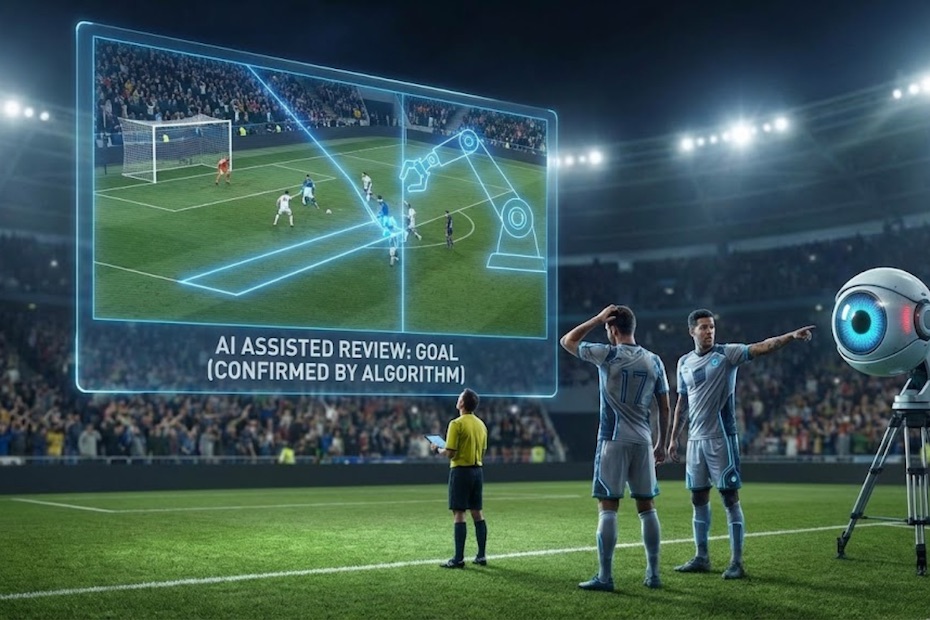
You Think You Could Ref Better, Don’t You?
Of course you do. You’ve yelled at human referees so many times that your vocal cords could qualify for overtime pay. In your mind, you could make cleaner calls, sharper judgments, and fewer spectacular blunders — all while sipping a latte on the sidelines.
But here’s the real question: Can AI referees actually make sports fairer and, dare we say, more enjoyable for you, your team, and that one parent who thinks their kid is the next Lionel Messi?
Spoiler: AI refs are smarter than you, less emotional than you, and definitely don’t get into arguments with coaches who use their hand gestures like interpretive dance.
Grab a snack, because your future referee might not even be human — and it’s about to get entertaining.
When You Realize Humans Mess Up… A Lot
Because you’ve seen some calls that belong in the Hall of Shame.
This is the phase where you finally admit it: human referees are trying, but wow, they miss things. Bias creeps in. Fatigue settles in. Someone sneezes too hard, and suddenly the entire match flow changes.
Enter AI — the digital overlord that doesn’t blink, doesn’t breathe heavily, and doesn’t care if your cousin is on the team.
You see those new systems in professional leagues: cameras everywhere, sensors tracking every movement, and algorithms that can spot an offside faster than you can blink. Studies already show that these systems produce faster, more consistent decisions, which is great because your heart rate cannot handle another referee meltdown.
Tech Takes Over — And You’re Weirdly Okay With It
Because watching AI call out your rival team feels spiritually uplifting.
Now you’re seeing AI in action: semi-automated offsides, ball-tracking systems, and those instant tennis calls that give you closure in under a second. Guess what? These systems don’t blink at pressure, don’t panic at booing fans, and definitely don’t have that one referee who believes power poses are part of the uniform.
You discover that AI refs actually reduce human bias. They don’t care what team is “supposed” to win. They don’t get tired. They just track data — millions of data points — and call it how it is.
Cue the collective sigh of relief from everyone who has trauma from bad officiating.
When You Start Imagining a World Where AI Runs Every Game
Spoiler: It’s not terrifying — it’s kind of amazing.
This is where the vision takes shape: fewer bad calls, fewer arguments, fewer “But ref, I didn’t touch him!” lying voices echoing across the field. You picture flawless games with consistent rulings and no last-minute referee panic.
But AI isn’t perfect either. Judgment calls? Still tricky. Did that player push intentionally or just trip over their ego? Hard to tell. AI still needs humans for the messy, dramatic, emotional parts of sports.
Still, the overall experience? Cleaner, faster, smoother. Even fans stop yelling for a whole 10 minutes. That’s basically a miracle.
Reality Check — Humans Aren’t Going Anywhere
Because someone still has to interpret the chaos.
This is where you learn that your human refs aren’t being replaced anytime soon. Hybrid systems — humans + AI — are the new move. Think of it as refereeing on “expert mode.”
AI handles the factual stuff: offsides, ball placement, line calls.
Humans handle the messy parts: intent, context, your team’s melodrama.
You begin appreciating the balance: fewer errors, more fairness, but still enough humanity to keep sports from feeling like a robot chess tournament.
You Finally Admit Sports Are More Enjoyable With AI
Yes, even you, champion sideline critic.
You feel the difference watching AI-assisted games: faster calls, fewer arguments, fewer stoppages. Kids aren’t as confused, coaches aren’t as heated, and parents — well, some still yell, but at least they now yell at machines instead of humans.
Players love the transparency. Coaches love the consistency. Fans love the drama reduction. And you? You love finally being able to watch a match without hypertension.
It’s almost peaceful. Almost.
Looking Ahead — The AI Officiating Era Is Just Getting Started
Brace yourself, the future whistle is digital.
Now you see the bigger picture: AI officiating isn’t just for elite leagues. Amateur sports, youth games, and community competitions are testing versions too. Soon, you might have automated referees for your kid’s weekend soccer match.
As AI systems get faster, cheaper, and more accurate, they’ll become normal — like instant replay, or your friend who insists they “don’t care who wins,” then screams at every call.
Better accuracy. Better fairness. Better enjoyment for everyone.
Do AI Referees Make Sports Fairer?
- Improve decision accuracy
- Reduce human bias and fatigue
- Deliver faster, consistent calls
- Enhance transparency for teams and fans
Your New Favorite Referee Might Not Be Human
You’ve traveled from rage at human referees to cautious optimism for AI officiating. Sure, your past experience and sideline expertise make you feel like you understand the game deeply — but that doesn’t guarantee flawless judgment. AI brings consistency, improved accuracy, and a bit of sanity back to sports, and you’re smart enough to appreciate that. Keep cheering, stay flexible, and embrace the future of fair play.
And the next time a perfectly timed call goes your way?
Just smile and whisper: “Thank you, robot ref.”

Cassandra Toroian is a sports-tech entrepreneur and CEO/co-founder of Ruley, the AI “e-referee” serving tennis, pickleball, padel, golf, and soccer. With 25+ years building companies—and a background in finance (MBA) plus Python training—she’s also co-founder of Volleybird and author of Don’t Buy the Bull. A former Division I tennis player, she’s focused on using AI to make sport fairer and more accessible.