
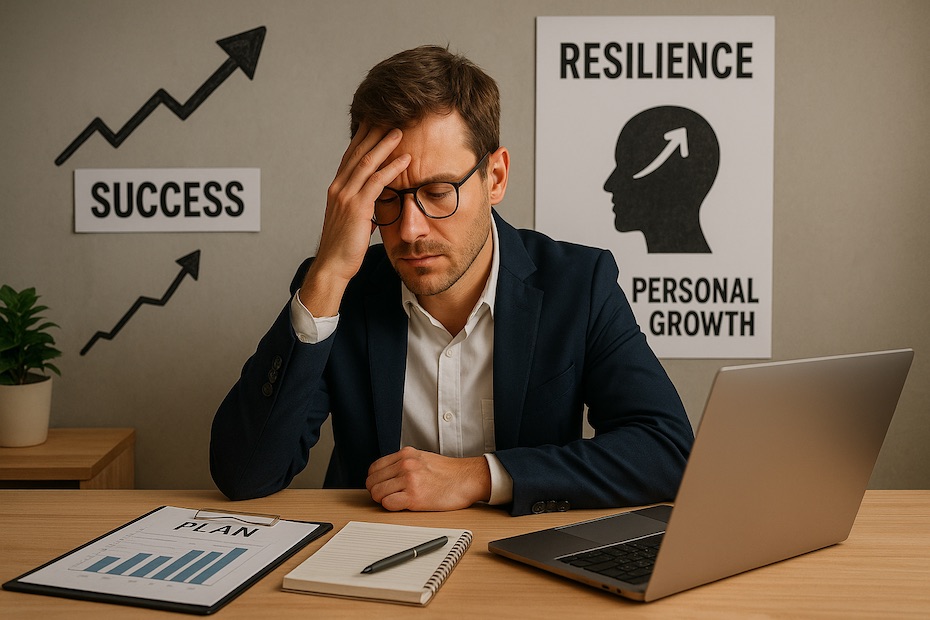
You Thought Entrepreneurship Would Be a Breeze?
Of course you did. You marched into entrepreneurship with confidence, determination, and the emotional stability of someone who once kept a succulent alive for six whole months. You believed you were built for this — a natural leader, a visionary, a person who definitely wouldn’t be googling “why is everything on fire in my business” at 2 AM.
But then reality asked: So, how resilient are you really?
Spoiler: resilience becomes your new superpower — the thing keeping you standing when your plans collapse like a poorly assembled IKEA shelf. Don’t worry, we’re about to walk through the beautiful chaos together.
The Bright-Eyed Beginning — When You Think You’re Unbreakable
Welcome to the phase where confidence meets chaos.
At first, you feel invincible. You have ideas. You have energy. You have the unmatched optimism of someone who hasn’t yet experienced client ghosting or product bugs that appear only when investors are watching.
You picture your business soaring while you sip artisanal coffee and talk strategy like you’re in a tech documentary. Life is good… for now.
Then the early hiccups arrive — tiny obstacles at first. A missed deadline here, a confused customer there, a spreadsheet that refuses to behave. And suddenly resilience isn’t a nice-to-have; it’s the thing you cling to like a life raft.
Reality Hits — And It Hits Like a Freight Train
Oh yes, the stage where the universe tests you for sport.
This is when things stop being cute. Clients change their minds. Launch timelines slip. Money gets tight. You start having conversations with your inbox because emails feel like personal attacks.
And amid all this, you discover a fun fact: entrepreneurial stress is real. Research literally shows founders deal with higher exhaustion, more sleep issues, and more pressure than most humans should legally experience. (But congratulations, you’re living the dream.)
Still, this is where resilience starts to take shape. You confront problems. You patch mistakes. You stop panicking (as much). You realize you’re not fragile — you’re just being forged through chaos.
The First Major Setback — Your Growth Moment in Disguise
Every entrepreneur has “the moment.” Here’s yours.
Maybe you lost a client. Maybe a product failed. Maybe cash flow looked at you and said, “Good luck.” Whatever it was, it knocked the wind out of you.
But here’s your plot twist: setbacks aren’t signs of failure. They’re actually resilience training sessions disguised as misery. You stop seeing them as doom and start treating them like feedback — unrequested, unsolicited, but useful.
Your mindset shifts from “Why is this happening to me?” to “Okay, what’s the lesson?”
This is adulthood-level growth. Gold star for you.
Burnout Flirts With You — and You Learn to Say No
Spoiler: You can’t outwork exhaustion, no matter how heroic you think you are.
This is when you hit the wall — the real, soul-crushing wall. You’re tired. You’re foggy. You’re questioning everything, including why keyboards have so many keys.
You finally accept that resilience isn’t about grinding nonstop until you fall apart. It’s about managing your energy like a valuable asset. You start setting boundaries. You rest. You find recovery habits that actually work — maybe a walk, a hobby, or a blissful hour doing absolutely nothing.
And strangely, your brain starts functioning again. Turns out, humans need rest. Who knew?
The Daily Grind — Where Small Habits Keep You Sane
You finally realize resilience isn’t a dramatic transformation — it’s tiny daily wins.
You stop romanticizing the big comeback moments and start valuing the small, boring habits that actually help: consistent sleep, planning your day, talking to mentors, asking for help, and occasionally stepping outside to witness sunlight.
You build rituals that stabilize your mood. You reduce overwork. You practice reflection. You gain a sense of control. Basically, you transform from “frantic founder” into “functional human.”
These habits don’t just keep you afloat; they make you sharper, calmer, and more consistent across seasons.
The Comeback Era — When You Realize You’re Actually Good at This
Not perfect. Not stress-free. But undeniably stronger.
Now you face challenges with a different energy. You don’t crumble. You don’t freeze. You respond, recover, and keep moving. You recognize stressors early and manage them instead of letting them take over your life.
Your decisions get sharper. Your emotional reactions get calmer. Your business and your mental health both benefit.
You’re not bulletproof — but you’re far more prepared than the person who started this journey.
How Do Entrepreneurs Build Resilience?
- Set boundaries to manage workload
- Reflect on setbacks for learning
- Use daily habits to stabilise stress
- Seek support and maintain recovery routines
You’re Still Standing — And That’s the Point
Looking back, you didn’t become resilient because you were naturally gifted. You became resilient because entrepreneurship forced you to grow, adapt, and operate with humility. Your early confidence got you moving, but your willingness to learn, reset, and rebuild is what shaped you into a stronger founder.
Keep practicing patience. Keep refining your habits. Keep showing up.
And remember — resilience isn’t about avoiding chaos. It’s about learning to dance with it without falling on your face.

Cassandra Toroian is a sports-tech entrepreneur and CEO/co-founder of Ruley, the AI “e-referee” serving tennis, pickleball, padel, golf, and soccer. With 25+ years building companies—and a background in finance (MBA) plus Python training—she’s also co-founder of Volleybird and author of Don’t Buy the Bull. A former Division I tennis player, she’s focused on using AI to make sport fairer and more accessible.